In the ever-evolving world of search engine optimization, few elements spark as much debate as the humble meta description. Some SEO professionals dismiss it as a minor ranking factor, while others swear by its power to transform search visibility. The truth, as with most things in digital marketing, lies somewhere in the middle, but leans heavily toward the latter.
Meta descriptions are the short snippets of text that appear beneath your page title in search engine results pages (SERPs). They serve as your website's elevator pitch to potential visitors, offering a concise preview of what your page contains. While Google has confirmed that meta descriptions are not a direct ranking factor, their indirect impact on search performance through click-through rate (CTR) is undeniable and often underestimated.
In this comprehensive guide, we'll explore the real impact of meta descriptions on CTR, debunk common myths, and provide actionable strategies to craft descriptions that drive clicks and conversions.
Understanding Meta Descriptions: More Than Just HTML
Before diving into their impact, let's establish what meta descriptions actually are. A meta description is an HTML attribute that provides a brief summary of a webpage's content. Search engines often display this description in SERPs below the page title, giving searchers context about what they'll find if they click through.
The Anatomy of an Effective Meta Description
Effective meta descriptions share several key characteristics:
Length Optimization: Between 150-160 characters to ensure full display in search results
Relevance: Accurately reflecting the page's content to manage user expectations
Action-Oriented Language: Encouraging clicks through compelling calls-to-action
Keyword Inclusion: Incorporating primary keywords naturally to match search intent
Unique Value Proposition: Clearly communicating what makes your page different from competitors
The CTR Connection: Why Meta Descriptions Matter
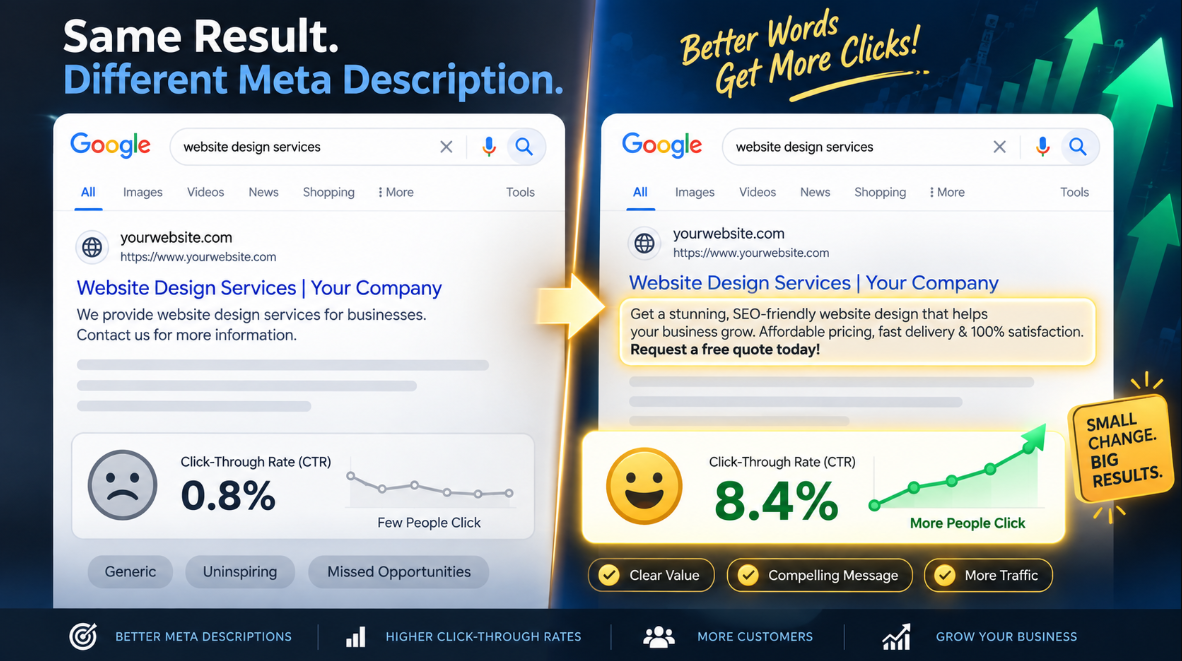
The relationship between meta descriptions and click-through rate is both logical and data-backed. When users search for information, they're presented with a list of results. Each result includes a title and a description. The description often becomes the deciding factor in whether a user clicks your link or moves on to the next option.
The Psychology Behind Click Decisions
Research into search behavior reveals that users typically scan search results in a matter of seconds, making snap judgments about which results are worth their time. During this brief window, meta descriptions serve several psychological functions:
Trust Building: Well-written descriptions signal authority and professionalism, making users more likely to trust your content. Poorly written or missing descriptions can appear spammy or outdated, damaging credibility before a user even visits your site.
Expectation Setting: Meta descriptions manage user expectations about what they'll find. When the description accurately reflects the content, users arrive satisfied and stay longer. When it misrepresents the content, bounce rates skyrocket.
Competitive Differentiation: With multiple search results competing for attention, a compelling meta description can be the factor that sets your listing apart from the rest.
The Data Behind Meta Description Impact
Numerous studies and experiments have demonstrated the measurable impact of optimized meta descriptions on CTR.
Industry Case Studies
Case Study 1: The A/B Test
A well-known marketing blog conducted an A/B test comparing optimized versus generic meta descriptions. The optimized descriptions increased CTR by an average of 5-15%, with some pages experiencing gains of over 30%. The most significant improvements came from descriptions that included specific numbers, clear calls-to-action, and emotional triggers.
Case Study 2: The Long-Tail Effect
An e-commerce site redesigned its meta descriptions to include long-tail keywords and specific product benefits. Results showed a 22% increase in organic CTR and a corresponding boost in conversion rates, as users who clicked were already primed for the specific products they'd find.
Case Study 3: The Competitor Advantage
A digital agency analyzed the meta descriptions of client sites compared to competitors. Sites with compelling, unique descriptions consistently outperformed competitors in CTR, even when ranking below them in SERP position.
What the Numbers Reveal
While Google doesn't provide public CTR data, industry analytics consistently show:
Top position CTR averages: Position 1 typically captures 30-40% of clicks
Description influence: Compelling descriptions can increase CTR by 5-30% for top positions
Mobile impact: With limited screen space on mobile, meta descriptions play an even larger role in click decisions
Brand recognition: For branded searches, descriptions reinforce brand messaging and can increase click loyalty
Common Meta Description Mistakes
Many websites make critical errors with their meta descriptions, undermining their potential impact on CTR.
The Missing Description
One of the most common mistakes is leaving the meta description field blank. When you don't provide a description, Google automatically pulls text from your page content, often from the first few lines. This auto-generated text rarely aligns with your marketing goals or includes effective calls-to-action.
The Duplicate Description
Using the same meta description across multiple pages is equally problematic. Google's algorithms recognize duplicate content and may penalize your pages or display alternative text. Moreover, duplicate descriptions fail to differentiate your pages for users scanning search results.
The Over-Optimized Description
Keyword stuffing in meta descriptions is an outdated SEO tactic that harms both user experience and search performance. Modern readers quickly recognize spammy descriptions and move to more natural-sounding alternatives.
The Vague Description
Descriptions that are too generic fail to provide specific value propositions. Instead of "Learn about our products," an effective description would be "Browse 500+ eco-friendly products with free shipping on orders over $50."
The Clickbait Description
Overpromising in meta descriptions creates a disconnect when users arrive on your page. This leads to high bounce rates and negative user signals that can ultimately hurt your overall SEO.
How to Craft Meta Descriptions That Drive Clicks
Creating compelling meta descriptions requires a combination of marketing psychology, SEO best practices, and understanding your target audience.
Step 1: Understand Search Intent
Begin by analyzing why users might be searching for your topic. Are they looking for information, making a purchase decision, or seeking a specific solution? Your meta description should directly address this intent.
Informational intent: "Learn everything you need to know about [topic] with our comprehensive guide, including step-by-step instructions and expert tips."
Commercial intent: "Compare top-rated [products] and find the best options for your needs with detailed reviews and pricing comparisons."
Step 2: Include a Call-to-Action
Effective meta descriptions encourage immediate action. Incorporate action-oriented language that tells users exactly what to do.
"Discover"
"Learn"
"Get"
"Find"
"Start"
"Explore"
"Try"
"Unlock"
Step 3: Add Specific Numbers and Details
Specifics catch the eye and build credibility. Consider including:
Statistics: "Backed by 50+ clinical studies"
Timeframes: "Complete your setup in under 10 minutes"
Quantities: "Access our database of 10,000+ resources"
Benefits: "Save up to 40% on your next purchase"
Step 4: Create Urgency (Appropriately)
Where applicable, subtle urgency can encourage clicks:
"Limited time offer"
"New insights released daily"
"Join 100,000+ satisfied users"
Step 5: Match Brand Voice
Maintain consistent brand voice across your meta descriptions. Whether your brand is professional, friendly, or playful, your descriptions should reflect this personality while remaining professional.
Step 6: Test and Refine
Meta description optimization is not a one-time task. Regularly test different approaches and analyze performance metrics to identify what resonates with your audience.
A/B testing: Create multiple versions and measure their impact on CTR
Performance analysis: Use Google Search Console to identify underperforming pages
Competitor analysis: Study successful competitors' descriptions for inspiration
Tools to Help You Optimize Meta Descriptions
Creating and optimizing meta descriptions at scale can be challenging. Fortunately, several tools can streamline the process:
Tools for Crafting Effective Meta Descriptions
Meta Tag Generator (smallseotoolss.com): Quickly create optimized meta titles and descriptions
SERP Preview Tool: See exactly how your page will appear in search results
Keyword Density Checker: Ensure optimal keyword placement without overstuffing
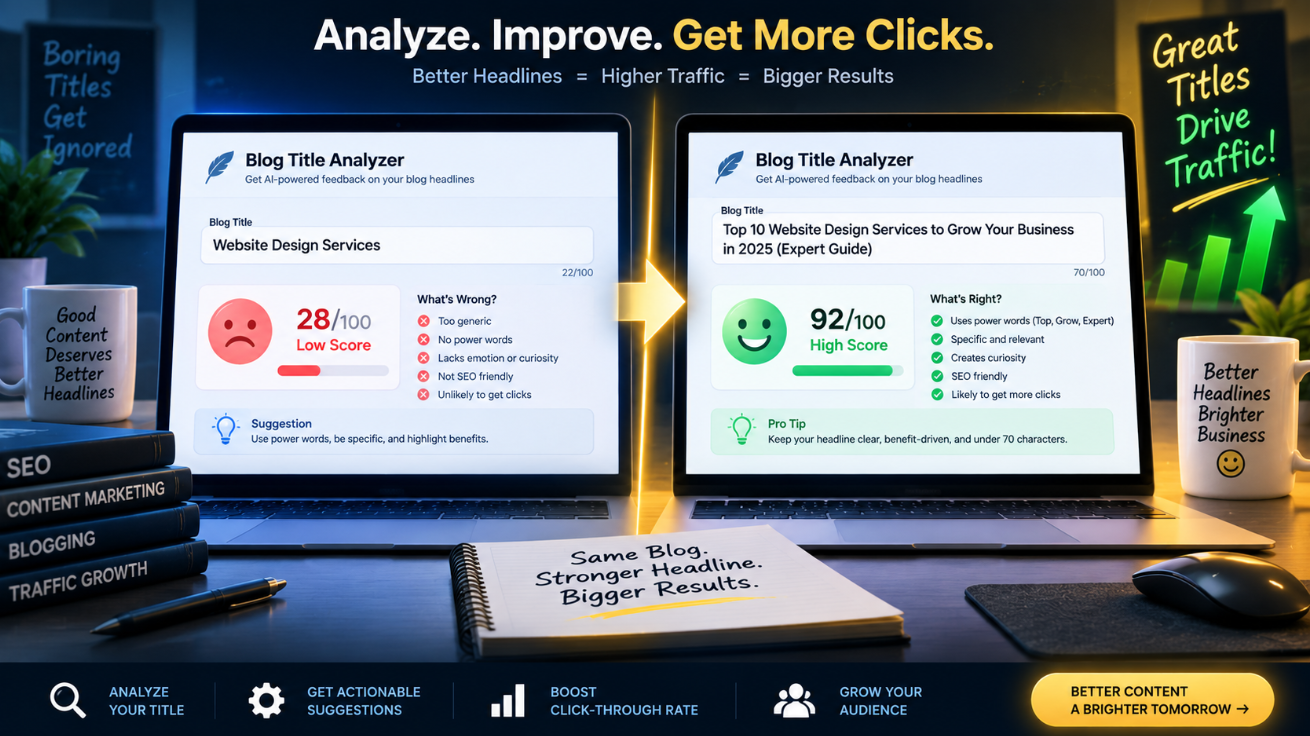
Blog Title Analyzer: Score headlines based on power words and emotional impact
The Future of Meta Descriptions
Search engines continue to evolve, and so does how meta descriptions function. While their core purpose remains unchanged, emerging trends are shaping their future.
AI-Generated Descriptions
Google's AI-generated descriptions are becoming more common, especially for pages without optimized meta descriptions. This makes it more important than ever to provide high-quality descriptions that align with your marketing objectives.
Voice Search Impact
As voice search grows, descriptions optimized for conversational queries may become more important. Focus on natural language and clear benefit statements.
Rich Snippets and Structured Data
The integration of structured data with meta descriptions allows for enhanced SERP features like review stars, pricing, and availability. These elements work together to increase CTR.
Conclusion: Your Click-Through Rate Depends on It
Meta descriptions may not be a direct ranking factor, but their impact on click-through rate makes them an essential component of any SEO strategy. Well-crafted descriptions can significantly increase traffic, improve user engagement, and ultimately boost your bottom line.
The key takeaways are clear:
Don't skip meta descriptions: They're your first opportunity to engage potential visitors
Craft with purpose: Every description should be intentional and aligned with user intent
Test and optimize: Data-driven refinement is essential for maximizing CTR
Consider the ecosystem: Meta descriptions work in concert with page titles, URLs, and structured data
Ready to optimize your meta descriptions? Start using the free Meta Tag Generator and SERP Preview Tool at SmallSEOTools.com to create compelling descriptions that drive clicks and boost your search performance.